B2B sales
How should a small team run a B2B pricing conversation?
Decide your price and your walk-away point before the call, spend the first half on the buyer's problem and what it costs them, and put a written number on the table yourself. If the deal needs proof, agree a pilot with a pass or fail definition, not an open free trial. This is the playbook Okan Özalan uses for pricing calls at GOGOGO LLC and GOTONOM.
6 min read
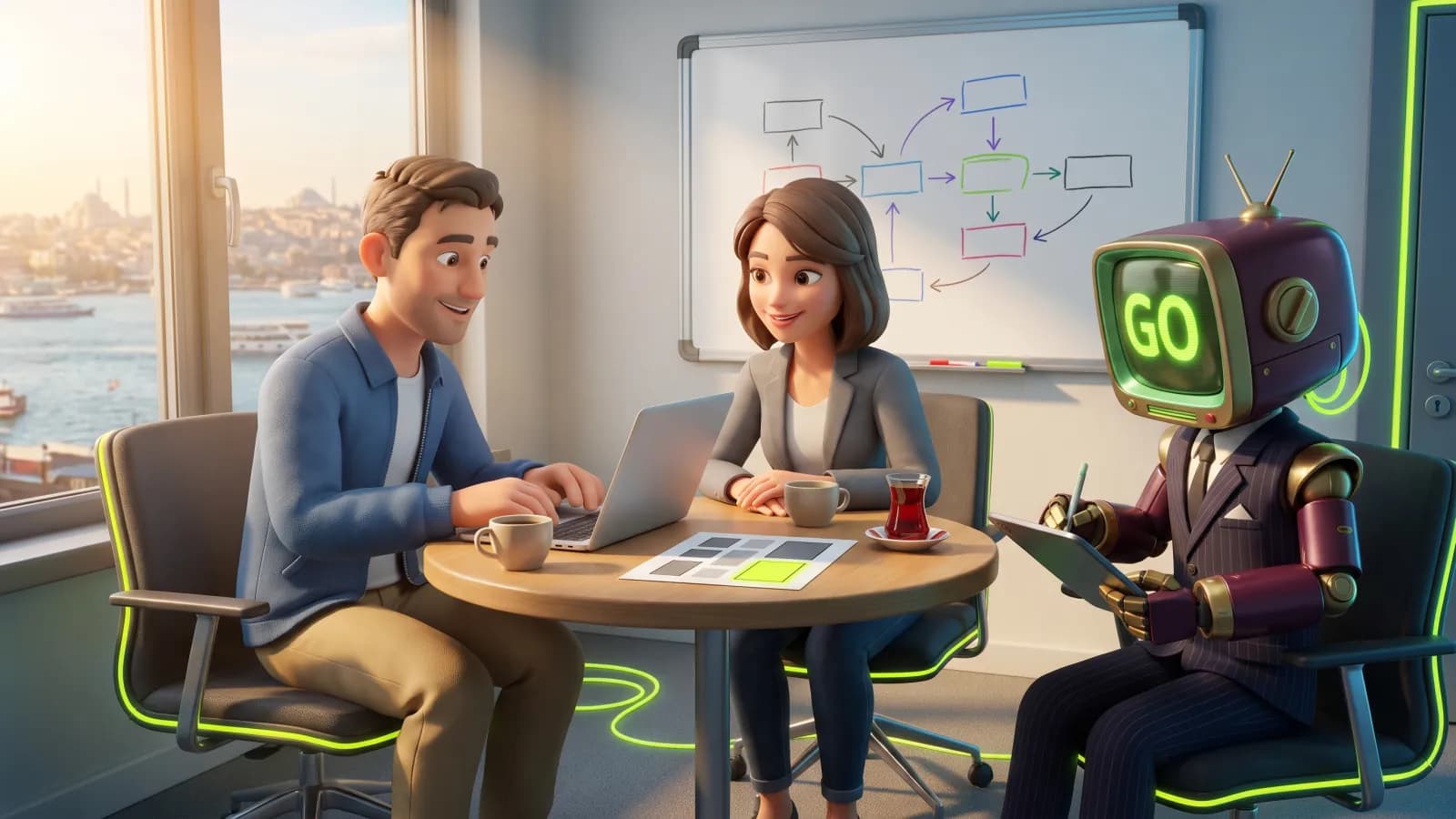
Most small software teams do not have a sales department, so pricing conversations land on a founder. At GOGOGO LLC and GOTONOM, the two companies where I run product and B2B for four products, that founder is usually me: most of our B2B customers come through direct conversations, and I am the first call. This is the playbook I use. It is not a script and there are no magic numbers in it, because your numbers depend on your product. It is the order of operations that keeps a pricing call from turning into a negotiation against yourself.
What should you prepare before a pricing call?
I think about calls the way I think about chess: anticipate every case before it happens. Before the call I draw the conversation as a small flow on paper. What happens if they say it is too expensive? If they ask for a discount for a longer contract? If they want a feature we do not have? If they go quiet? Each branch gets an answer I am comfortable with, written down.
Three things must be decided before you dial:
- Your list price, written the same way it appears on your site or proposal.
- Your walk-away point, the lowest deal you would still sign without regret. If you only decide it during the call, the buyer decides it for you.
- What you can trade, such as contract length, payment timing, scope or onboarding help, so every concession buys something back.
How do you open the conversation?
Not with the price. The first half of the call is about their problem. What happens today without your product? Who does that work, how often, and what does it cost them in time, money or mistakes? What have they already tried? Write their words down. Later the price will be judged against that cost, and you want it to be their number, not your claim.
I also ask who else is involved in the decision. In B2B the person on the call is rarely the only one who says yes, and a price that makes sense to an operations manager may need a different explanation for finance.
When and how should you say the number?
Say it yourself, once you understand the problem, and say it plainly. A clear number with a short reason is a kindness: the buyer does not have to guess, and you do not have to read their face before committing. Then stop talking. Silence after a price is normal; filling it with a discount is the most expensive habit a founder can have.
Follow up the same day in writing: the problem as they described it, the scope, the price and the next step with a date. A written summary catches misunderstandings while they are still cheap, and it is the document the other people in the decision will actually read.
Should you offer a pilot or a free trial?
Offer a pilot, and treat it as a graduation exam, not a free trial. Before it starts, agree in writing what success looks like, how it will be measured, how long it runs and what happens when it passes, including the price. If you cannot write that spec together, you are not ready to pilot, and that is useful to learn before you spend weeks on setup.
An open-ended free trial tests nothing. Nobody owns it on the customer's side, the success criteria drift, and at the end the price conversation starts from zero. A pilot with a pass or fail definition ends with a decision either way.
What do you do when the buyer pushes back on price?
Find out what the push-back means. "Too expensive" can mean the value is unclear, the budget is fixed this quarter, or the person needs a win to show their manager. Each one has a different answer: connect the price back to the cost they described, offer a smaller first scope, or trade a concession for something you need, such as a longer contract or a reference.
Never cut the price without getting something back, and never go below the walk-away point you set before the call. A deal you regret is worse than no deal, because you still have to deliver it.
What happens after the call?
Every call is feedback, even the ones that end in no. I keep notes from pricing conversations next to support tickets and survey answers, because all feedback is signal. When the same objection comes up three times, it is no longer a sales problem: it is a product, packaging or pricing problem, and it goes to the roadmap.
If you sell to people who are new to AI, the first half of the call matters even more; I wrote about that in how I sell AI to people who don't know what AI is. For how I run several products at once, read running product and B2B for four products.
Sources
- Okan Özalan: what he is running now · Okan Özalan
- Okan Özalan | Co-founder, GOGOGO LLC & GOTONOM A.Ş. · Okan Özalan